Showing posts with label rag trade 101. Show all posts

Thursday, March 31, 2011

The funny thing about branding...


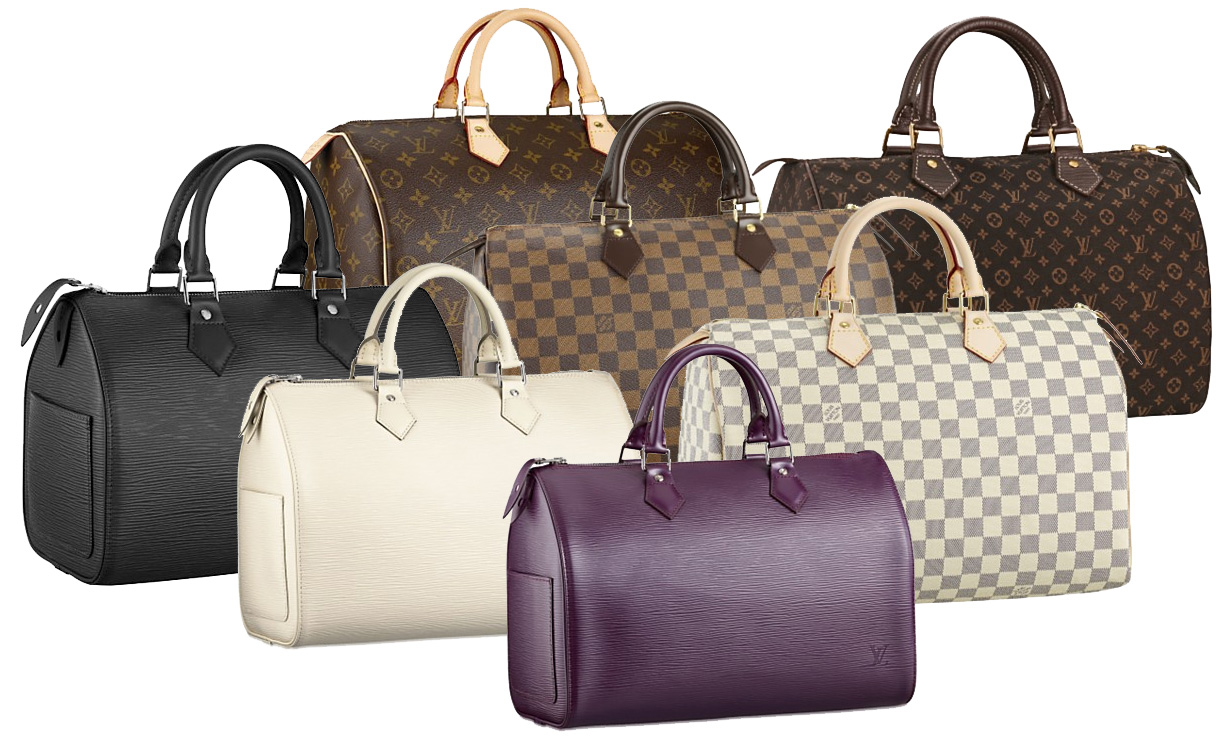
Does anyone know why a Louis Vuitton monogram speedy 30 costs $730? Most people would say its because of the quality of the leather or the level of craftmanship that goes into making each bag. Wrong, while Louis Vuitton bags are very well made, those LV emblazoned bags you see girls proudly carrying around your local mall are not made from leather, nor do they pretend to be. If you go to the Louis Vuitton site you can see in bold letters that you monogram/damier ebene/damier azur speedy is made from canvas, just like that Kate Spade bag you had in middle school. Actually only the piping and handle are leather and my sources tell me they aren't made from the highest quality leather. So if your bag is not leather, although you thought it was, why did you just drop your paycheck on that easily copied bag? One word, status.

Since before I can remember Louis Vuitton, like most high end labels, has been associated with having a certain socio-economic standing. Much like the car you drive, what part of town you live in and how many languages you speak, carrying a Louis Vuitton speaks volumes about your tax bracket, or it used to. Brands like Louis Vuitton work tirelessly to ensure that they maintain their top tier status, from pricing and positioning to deciding which celebs they want to align with their brand. Why do you think you've never seen Louis Vuitton bags on sale? Markdowns and promotions every other season are fine for bridge brands or department stores trying to clear their seasonal inventory, however they can cheapen a brand in the eye of their target customers. What about sample sales, you ask. Well sample sales are usually exclusive events that fly under the general public's radar-you have to know about them or be invited to attend-so they have an air of exclusivity which is key to maintaining the prestige of a luxury brand.

In the end kiddies, I'm not telling you to stop buying Louis Vuitton, unless you are going broke and hungry which is so NAGL, all I'm saying is know what you're buying. Never for a moment believe that a designer item is priced at an arm and a leg simply because its of better quality. While they probably do use better fabrics and legit production facilities, the only reason they are priced that way is to make you think they are better. After a certain price everything is of comparable quality,take this from girl who spent 4 years learning how to evaluate the quality of the garments you buy, actually I have it on good authority that a large portion of luxury brands are made in the same factories as their bridge and better counterparts. How else do you think some knock-offs, I mean inspired by, pieces look almost like the originals and fly off the sewing machines at the same time?

Thursday, November 11, 2010

Rag trade 101: Sweat-shop labor, you get what you pay for


In my morning walk through the Internet I came across this piece on MISS asking consumers if they would boycott a company because they use sweat-shop labor. As I was writing my lengthy response, I remembered that I have a blog to tackle such issues with as many words as I need.

The usage of sweat-shops in the manufacturing of apparel is more widespread than most of us would like to acknowledge and there are several contributing factors that keep sweat-shops in business. At the end of the day money is the deciding factor on whether a company like Nike goes with a cheaper manufacturer whose factories may have unsavory working conditions or a more costly less sketchy factory.

Most of us know that the garments we buy are not purchased at cost, meaning markups are built in to allow for everyone involved to make a profit from the wholesaler to the retailer. Depending upon the price point of a say a pair of jeans, the markup could be anywhere from 60%-200% which accounts for the fact that they may go on sale and the retailer needs to make a profit off of that transaction as well. That said, when a company sends their team out to source everything from fabrics to labor, the team is focused on keeping the costs down and the profit margins high. They also have to take into consideration the turn around time on the garments they are sourcing, although fashion operates almost a year ahead retailers need to be ready to produce those "inspired by pieces" the second they debut on the runways giving them a shorter than normal lead time. Don't get me wrong, sourcing teams are not out there looking for sweat shops that can produce garments cheaply and quickly, they are looking for factories that fit into specific budgets and timelines and occasionally pick based on those parameters not based on human rights. (Also the production team that deals with factories and such tends to work in an office in the company's home country and only make scheduled visits to factories, and we all know that if you tell someone when they're having company over they tend to put things in perfect order.) With everything focused on the almighty dollar, is it no wonder that the majority of companies busted for sweat-shop labor tend to be at the mid to discount price range.

Companies like Forever 21, who was recently accused of using sweat-shops to produce their blatant knock-off that disintegrate in the wash, make big money by mass producing cheap products and reselling them at a price point that attracts their core customers, teenage girls. With $7 tank tops and $20 skirts, its no surprise that they are working with factories that pay their workers little to nothing and ask them to work in unsafe conditions. I'm not saying that Gucci or Louis Vuitton have never used cheap labor, but I am saying that with higher prices you'll usually find bigger budgets for things like labor and the quality of the products will tell the tale. Like the saying goes you get what you pay for.

What can consumers do to discourage sweatshop labor? Well first of all stop buying stuff for quantity instead of quality, usually high quality goods are made by adults in factories that keep them somewhat happy. If you can spend money replacing those $7 tops every other month because they don't last, you can afford to purchase one $15 top that will last you at least a year. Think of purchasing quality goods that may cost more as an investment, not as you paying too much for something that you can get cheaper somewhere else. Also look for goods that are made in the US. Yes, we do have sweat-shops  here however our labor laws require closer federal monitoring for things like safety and workers rights, and purchasing goods made in the US go a long way to stopping outsourcing, generating more jobs at home, and helping pull us out of this recession mess.

If you tried boycotting every company that uses sweat-shop labor you'd have very few places to shop in your local mall, and I'm not asking you to do that. What I am asking is for consumers to be better educated on where their goods come from and how they are produced, that way instead of behaving like mindless purchasing machines you can at least know what went into your Forever 21 top before you fork over your babysitting money.

Tuesday, October 5, 2010

You can lead a horse to water but I still can't afford your clothes


Patrice hamming it up at Saks for FNO...we still haven't gotten our offical pics from that.
 Last month the fashion industry rubbed elbows with the unwashed masses in a desperate attempt to turn party goers into shoppers at the second annual Fashion’s Night Out. Although revelers from Brooklyn to Bombay crowded shops to get a glimpse of their favorite celebrities, designers, and fashion folks, by and large they kept their cash to themselves. (Now that I think about it, I’ve been to a ton of in store events in the past year and have never seen people doing anything but talking smack, eating, and getting a buzz off of the free drinks.) This shouldn’t come as a shock to retailers who have been suffering from the very recession that brought into existence the need for a worldwide event like Fashion’s Night Out. They know that no matter how much champagne they pour and how many celebs are in store to pass it out, Louboutin’s are still out of most shoppers’ budgets right now. However, this does not stop retailers form bringing the dog and pony show to town every so often in an attempt to raise spirits and profits.


There are several reasons why luring potential shoppers into your store with the promise of free stuff and a good time doesn’t always translate into increased sales, increased traffic sure but traffic does not always mean money. The first issue is while it is true everyone loves free stuff, using the word free to gather a crowd almost always ensures the majority of the crowd is looking for FREE stuff not stuff they have to pay for. (Also people aren’t so dumb as to fall for "spend xyz dollars and get this free", especially if they don’t have xyz dollars and the free thing is worth less than the amount they have to pay. Also if I have to buy something to get something free, is it really free?) While I do understand that by drawing a crowd into your less than crowded store you are not only attempting to increase sales that night but to also generate future sales, which may or may not happen because in the freebie/sale seeking crowd you just lured in may or may not be interested in or able to afford your full priced merchandise, bringing me to point deux.

No matter what dog and pony show you put on for customers, at the end of the day they just don’t have the same disposable incomes that they once did, especially when dealing with Middle America. The end. Shoppers aren’t in search of a place to drink wine dangerously close to clothes they can’t afford, they are looking for more value for money, whether that means being able to buy more for less or spending the bulk of their money on investment pieces instead of wasting cash on trendy items.

Don’t get me wrong, I don’t think in store events are total wastes of time for retailers, I just think throwing a “customer appreciation” party once a month is not the best use of time and money for already struggling stores. Also its is super cheesy to go into a store and hear a DJ playing the same muzak that the stores usually play while a clumsy associate passes you J. Roget or Andre.

Thursday, August 19, 2010

Rag Trade 101: Its all in the details


With the economy in its current state, the retail trade has been riding a roller coaster that has resulted in cut backs, store closures, and a general sense of uneasiness all around. In these times, massive chain stores are grasping at straws to find magical cures as to why their customers are turning to lower price points or higher quality goods. They've brought in efficiency experts to stream line production and delivery, experts in retail planning to maximize square footage, and financial planners to cut costs, however they have completely ignored developing their first line of defense in the fight for your hard earned money, the sales associate.

Step into any store in your local mall and ask a sales associate at random questions about a garment's fabrication, construction, or styling and more importantly WHY these things matter in their products and see what they say. Speaking from several years of experience in the trenches, ie working in retail, I can  consistently say that sales associates at the moderate-to-better price points (read the average stores in your local malls) are not schooled on product knowledge unless they have been in retail for YEARS or have a background/love of fashion. In a healthy economy this lack of product knowledge at this price point doesn't matter, I mean $150 for a dress when times are booming isn't that big of a deal, however the second times get tough, the sales associate selling a $150 dress to a cash strapped middle-class soccer mom might as well be selling her a luxury item which requires an entirely different approach. Sellers at the bridge to designer price points (Bloomies to Neimans and beyond) can tell you that selling a pair of $500 slacks takes knowing what they are made of, where they came from, how they travel, how they fit into the customer's life and wardrobe, and where to get them altered. the difference between the approach at say Banana Republic, BCBG and Louis Vuitton has more to do with these details, and how each associate is armed with them, than anything that corporate is doing on the back end.

With retailers being at the mercy of their shoppers, arming the people who spend the most time with customers with the best possible tools is akin to making sure that every solider has ammunition. Arming your associates goes far beyond making sure that they greet each customer, take them to a fitting room, flatter them unnecessarily about each potential purchase, and thank them for shopping. Equipping sales associates means you teach them how to read the care symbols on a garment-many only have symbols these days-and most importantly how to communicate the value placed on every garment by those guys at corporate to every interested customer-not literally of course. Doing so may not make each and every customer buy but it will make for more return customers and help ensure that today's "Nothing worked" turns into tomorrow's big purchase.

Tuesday, June 8, 2010

Rag Trade 101: Targeting the unemployed


From ages 16-23 you could find me on any given day walking lazily through my local mall spending my parents’ hard earned cash and pushing my credit cards to the limit all for the sake of picking up more disposable clothes. As a child born during the height of the “me” focused 80s and an adolescent during the prosperity of the 90s, being brand conscious had been hardwired into my very soul the moment my mom slipped me into my first pair of Oshkosh B’Gosh overalls. At that tender age, my love affair with quality over quantity began and like most of my peers I soon associated certain brands not only with quality but with my social status and ultimately my self-worth.


Fast forward a few years and the very age range that has been retailers’ bread and butter for the past 10 years is now experiencing a record high of unemployment. With 18% of high school drop outs, college grads, newly minted lawyers and MBAs unable to become productive members of society, the mid priced brands that they learned to rely on are now out of their price range with student loans, credit card debt, and things like rent constantly looming above their heads. For retailers this means that with their core customer now unable or unwilling to purchase merchandise at full price that they would have bought a few years ago, they must either shape up or ship out as they watch former loyal customers shop at lower price points. While brands like French Connection and American Apparel, both targeted at very hip and very unemployed 18-24 year olds, flounder to reconnect with their core customer while maintaining profitability, brands like Forever 21, with their fast fashion and low prices, are busy exploiting not only their usual teen and tween markets but the unemployed and underemployed recent college grads. This has forced mid-priced brands, which once placed a premium on selling quality goods for a reasonable price, to ride the trend wave like their lower priced counterparts without having the means firmly established to do so. Not only are mid-priced brands suffering from a supply chain not set up to quickly turn out trends at a fraction of their current costs, they have also began to alienate their core customer by changing their product offering in an effort to make up for some of the losses they have incurred.

American Apparel, once operating primarily as a wholesaler selling blank t-shirts to screen printers, uniform companies, and retail brands, has gone from a hipster haven of affordable basics to a parody of itself that none of their former diehards would set foot in. With ads on every blog showcasing their costume like full body lace leotards on barely legal practically nude models, and stores filled with out of print gay porn magazines, Mr. T starter kits, and overpriced vintage sunglasses American Apparel has gone from ironic to sad in the past three years in an effort to keep up with the hipstering of America (I’ll do a post on that soon I promise, as it is one of the banes of my existence). By overreacting to what they thought their loyal customer wanted and filling their store to the brim with overpriced vintage and vintage inspired goods, American Apparel has not only alienated their customers but overestimated their loyalty. Why would anyone buy a $200 pair of vintage frames when they could go to any thrift store and pick up the same pair for $5?

Eventually the recession will pick up and the once jobless Millennials will get hired and start spending that hard earned grown up money. However, due to their experiences with chronic unemployment no one knows if they will spend the way they did back in 1999.